The Story Behind Meteora Vineyard

Our Story
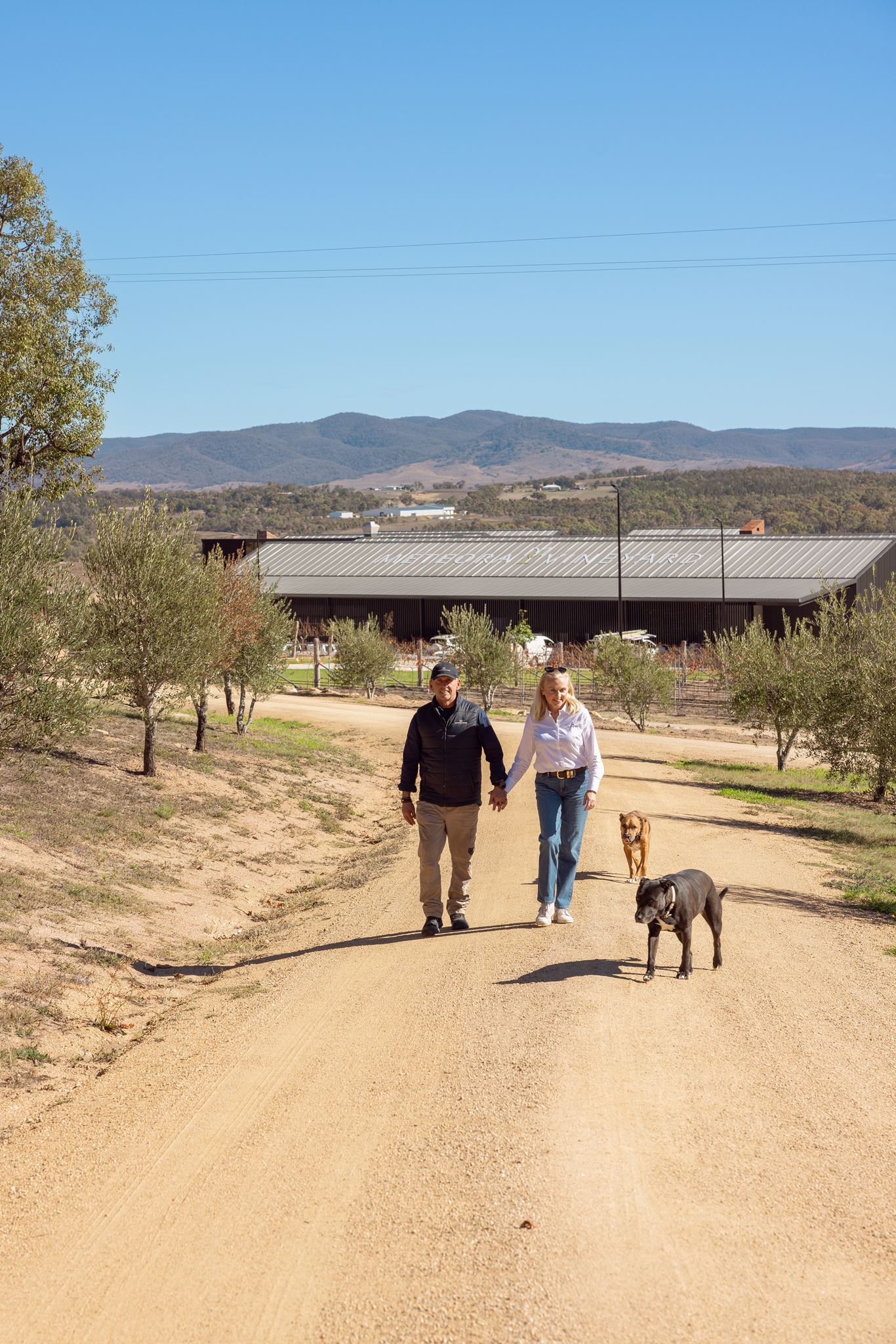
The Catsoulis family didn’t intend to buy a vineyard, but after a chance weekend in the country, they fell in love with the region instantly. What began as a family escape quickly evolved into a vision for something much greater.
Having spent years exploring the outdoors and visiting the Granite Belt, Andrew and Karen were drawn to Ballandean by its dramatic granite landscapes, elevated climate, four distinct seasons and strong sense of community.
“The sheer beauty of this place, the incredible local people we met, the four distinct seasons, the elevated climate of the Granite Belt, and the dramatic granite outcrops—it all felt a little bit magical. We knew pretty quickly we had found our next adventure.”
Over the past six years, this labour of love has transformed a once-neglected farm into a flourishing vineyard and destination. Andrew and Karen envisage creating a generational legacy of beautifully crafted, estate-grown, single-vineyard wines, grown, produced and shared entirely on-site in a setting that celebrates the unique character of the Granite Belt.
.jpg)
More than a vineyard, Meteora is a story of vision, family heritage and belief in what the Granite Belt could become. Andrew, founder and Managing Director of National Storage, grew the business from a single storage centre in Oxley in 1995 into one of Australasia’s largest storage providers. Combined with a shared background in law and a lifelong passion for property, design and the outdoors, Andrew and Karen brought a long-term perspective to the creation of Meteora.
The estate’s name reflects that same sense of history and connection. Inspired by the famous monasteries and rock formations of Meteora in Greece, and the iconic Gold Coast building Andrew’s father constructed in its name during the 1970s, Meteora pays tribute to the family’s Greek heritage while celebrating the dramatic landscape that surrounds the vineyard today.
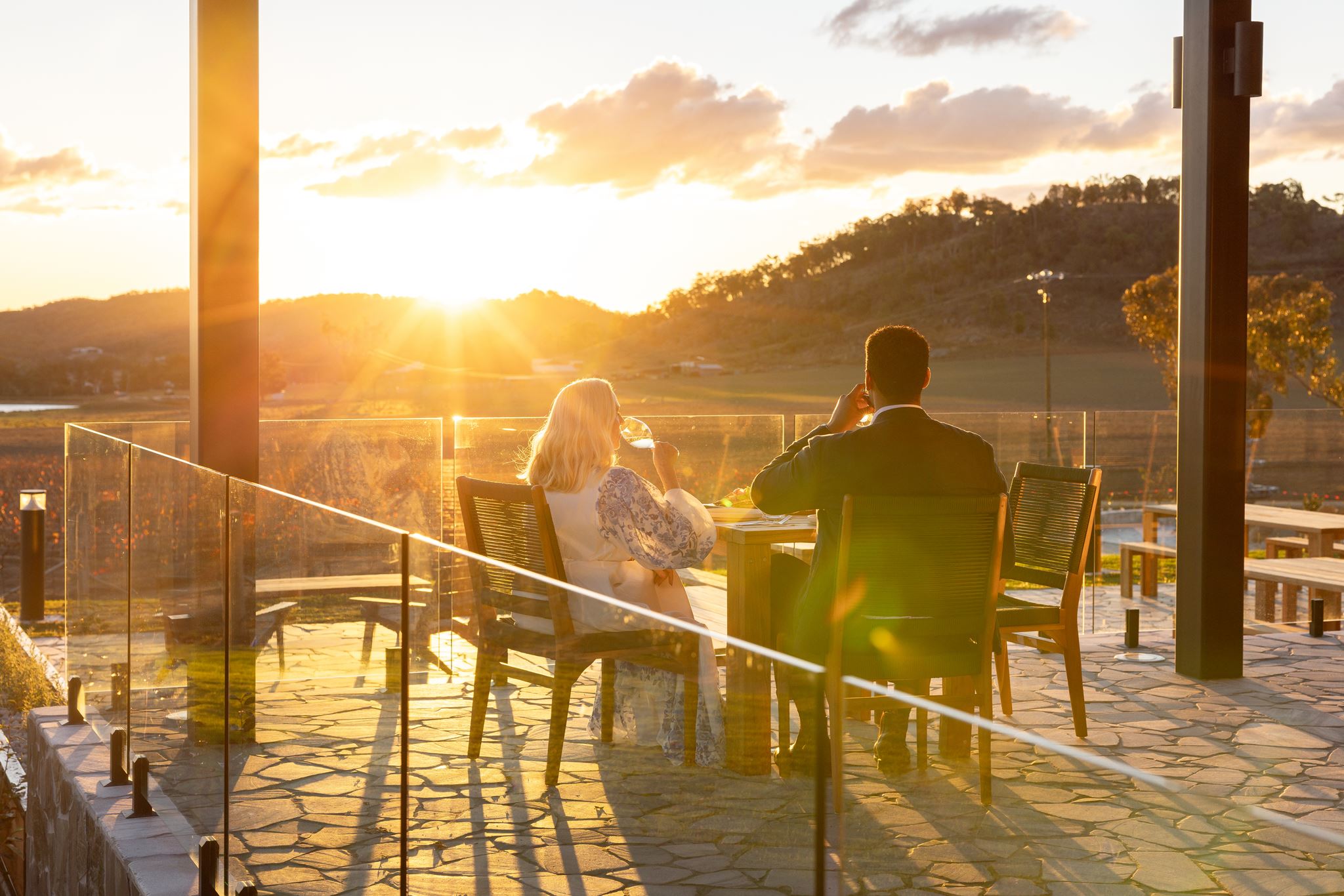
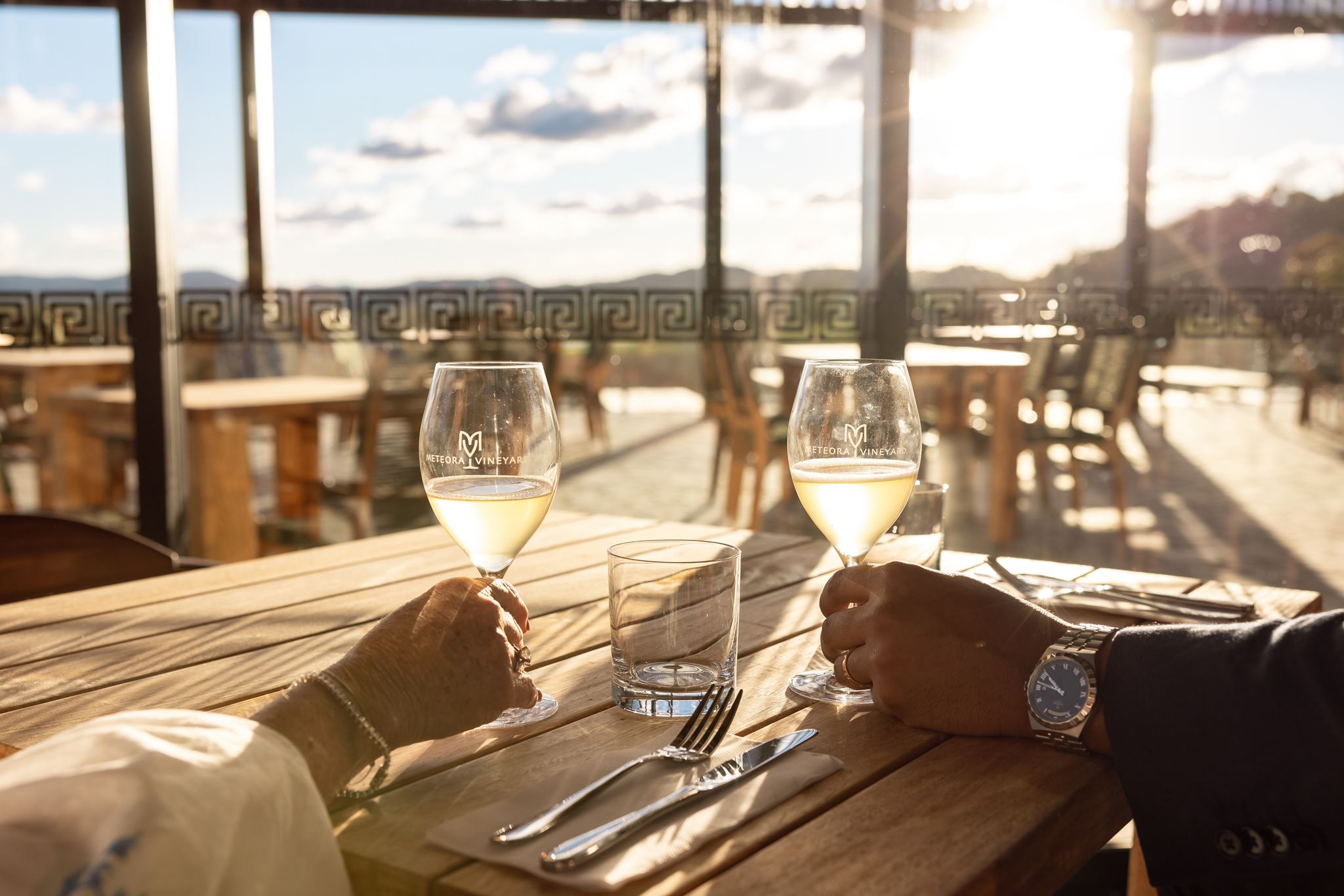
Today, Meteora spans a state-of-the-art winery, cellar door and restaurant, Queensland’s first wine cave, and a growing collection of experiences, with luxury accommodation and further agritourism offerings still to come. At its heart, however, Meteora remains a family project, created to share great wine, hospitality and the beauty of the Granite Belt with generations to come.
Our Vineyard
Deeply rooted in the Granite Belt, Meteora is a story of dedicated people, and a generational connection to the land.
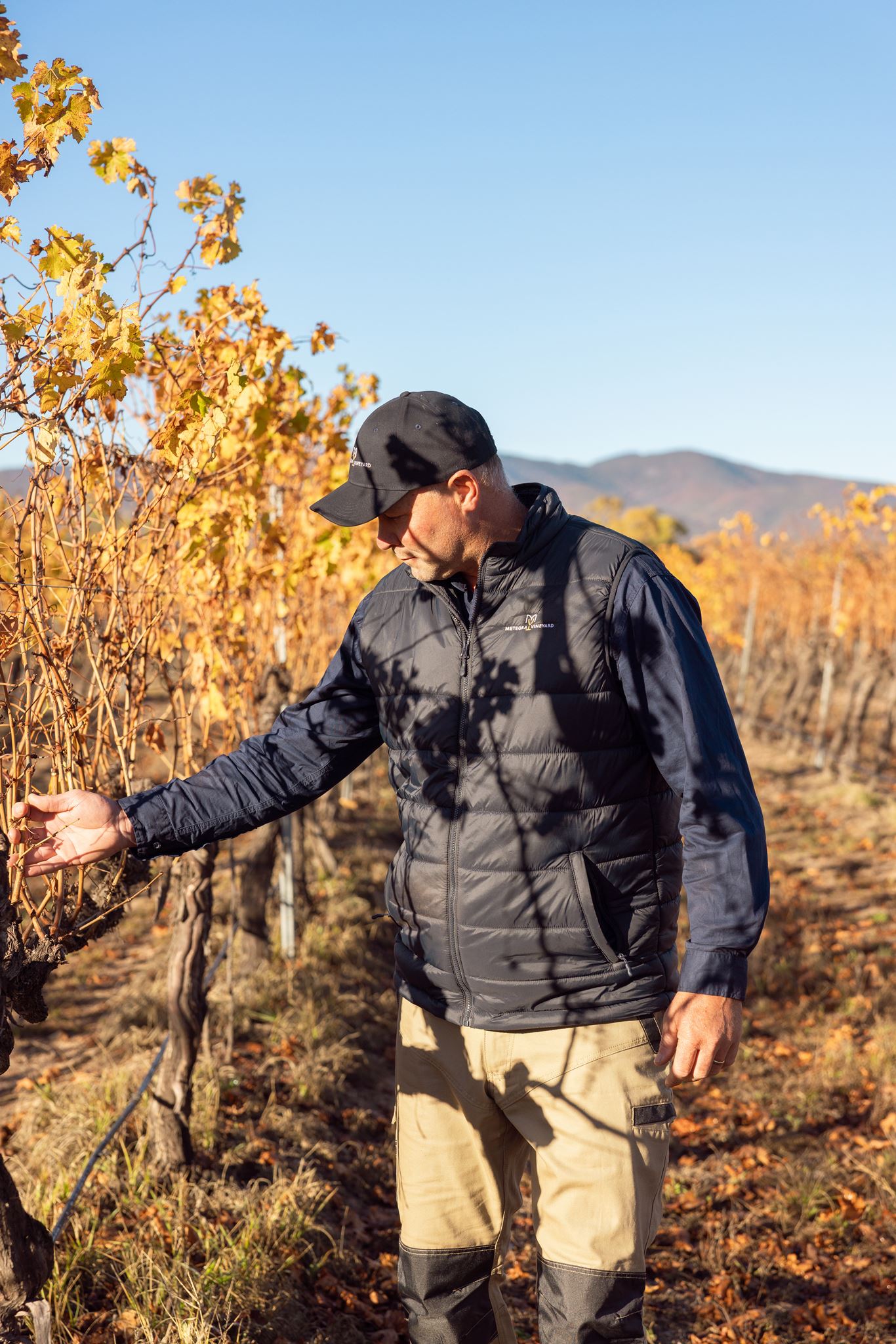
Meet our Vineyard Manager
Scott Kerridge is a fourth-generation Granite Belt viticulturist with a lifetime of hands-on farming experience and deep regional knowledge. Born and raised in Stanthorpe, he grew up working alongside his family on a stone fruit and table grape farm established by his great-grandfather and grandfather before continuing his career in viticulture under the guidance of his father.
Known for his meticulous approach and unwavering attention to detail, Scott believes that exceptional wine begins in the vineyard. He embraces the challenges of the Granite Belt's unique climate, understanding that its extremes are what produce fruit with remarkable colour, flavour and character.
Deeply connected to the land and passionate about the future of Ballandean, Scott is proud to help showcase the quality and potential of the Granite Belt through his work at Meteora.
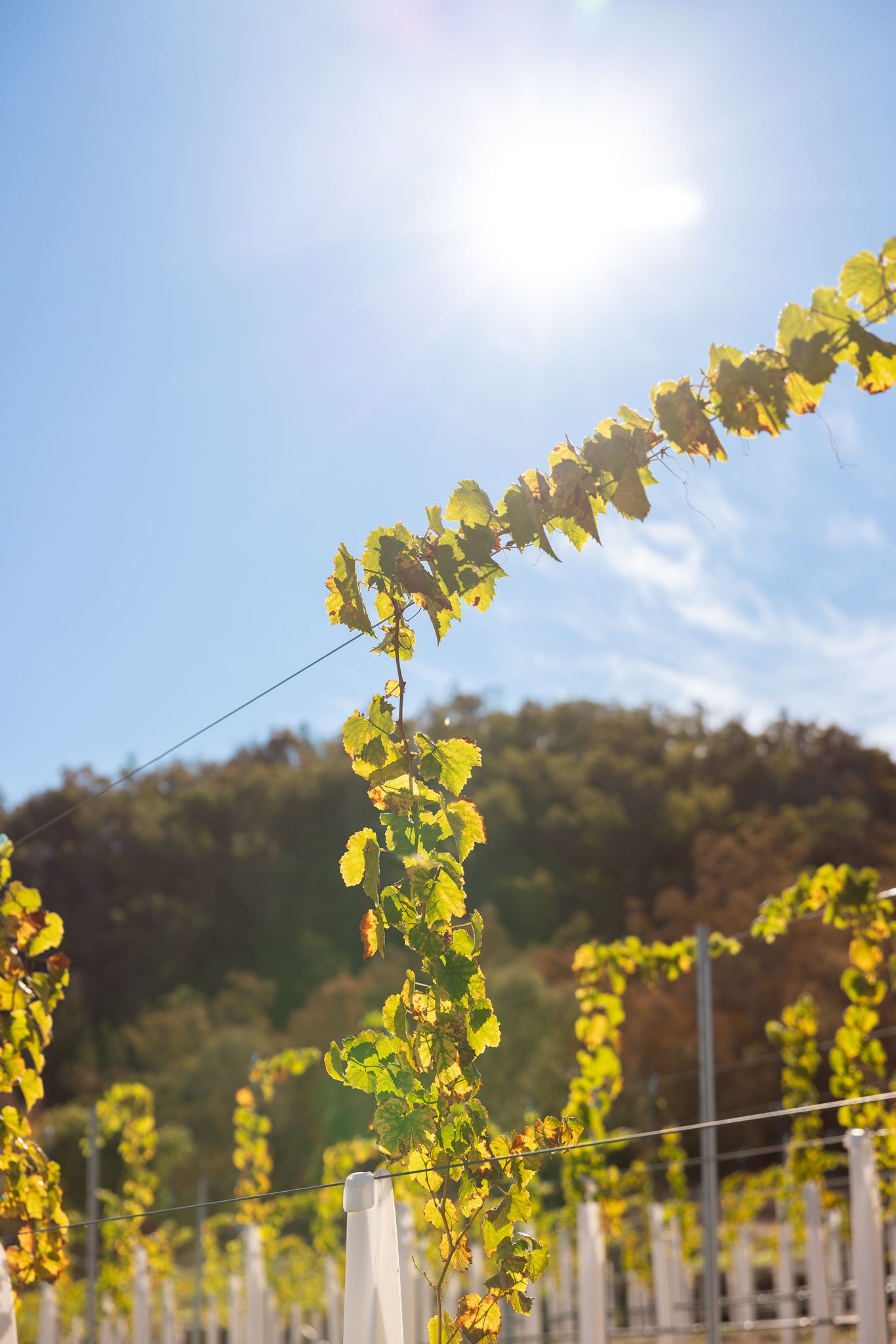
Sustainability
Sustainability is woven into every aspect of Meteora. From planting more than 12,000 new grapevines, including Italian and Mediterranean varieties suited to the Granite Belt climate, and transplanting over 200 mature olive trees, to harnessing solar energy supported by 86.4kWh of battery storage, every decision has been guided by a commitment to the land and future generations. Rainwater harvesting, estate-grown produce from our greenhouse and kitchen garden, and the planting of approximately 2,000 trees and plants help create a resilient and thriving ecosystem across the estate.
Throughout the development, reclaimed hardwood timbers, historic railway sleepers, structural beams salvaged from old railway bridges, and more than 10,000 heritage bricks—many over a century old—have been thoughtfully repurposed, preserving character while reducing environmental impact. The result is a destination that celebrates the unique character of the Granite Belt while respecting the environment that makes it possible.
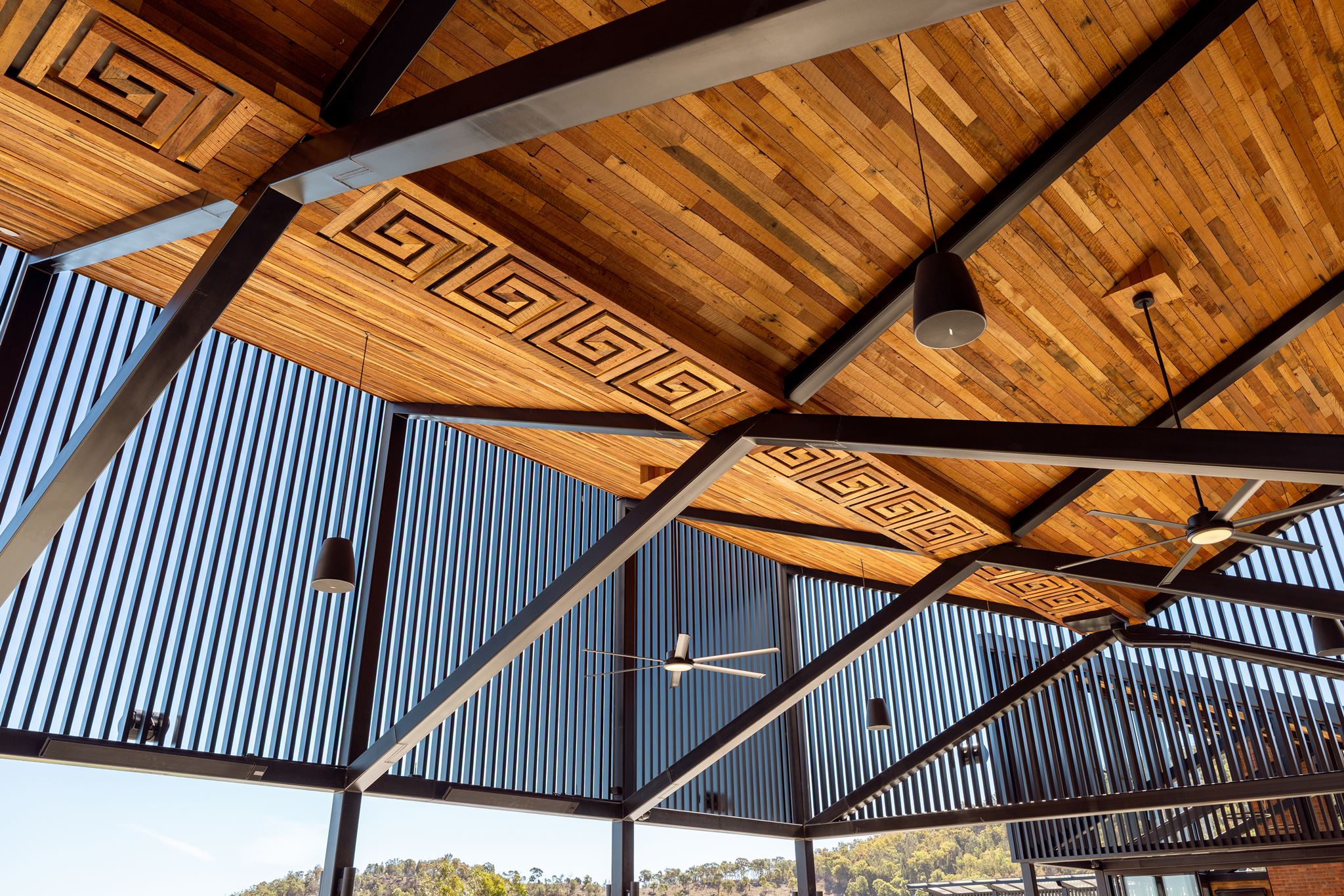
The Design
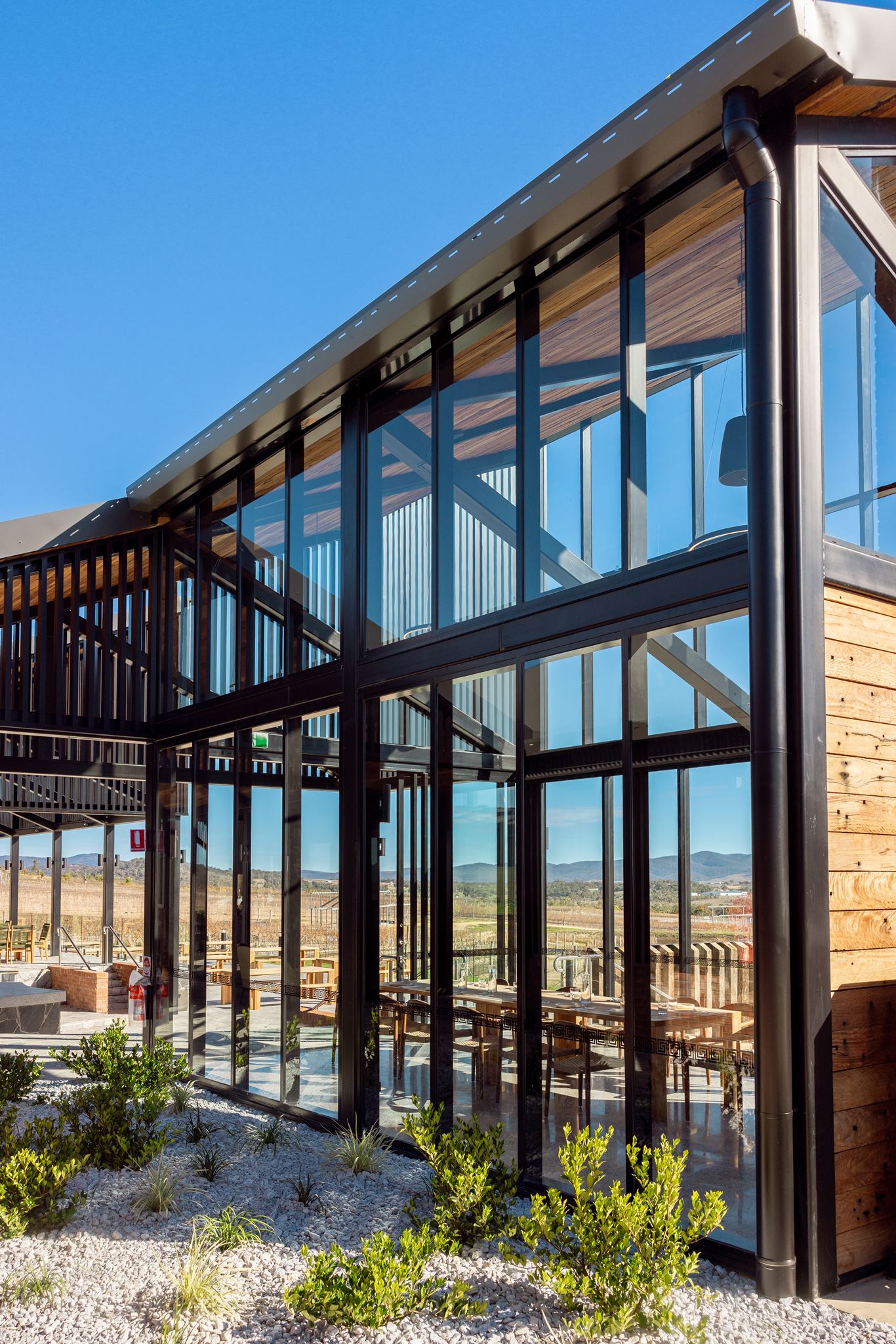
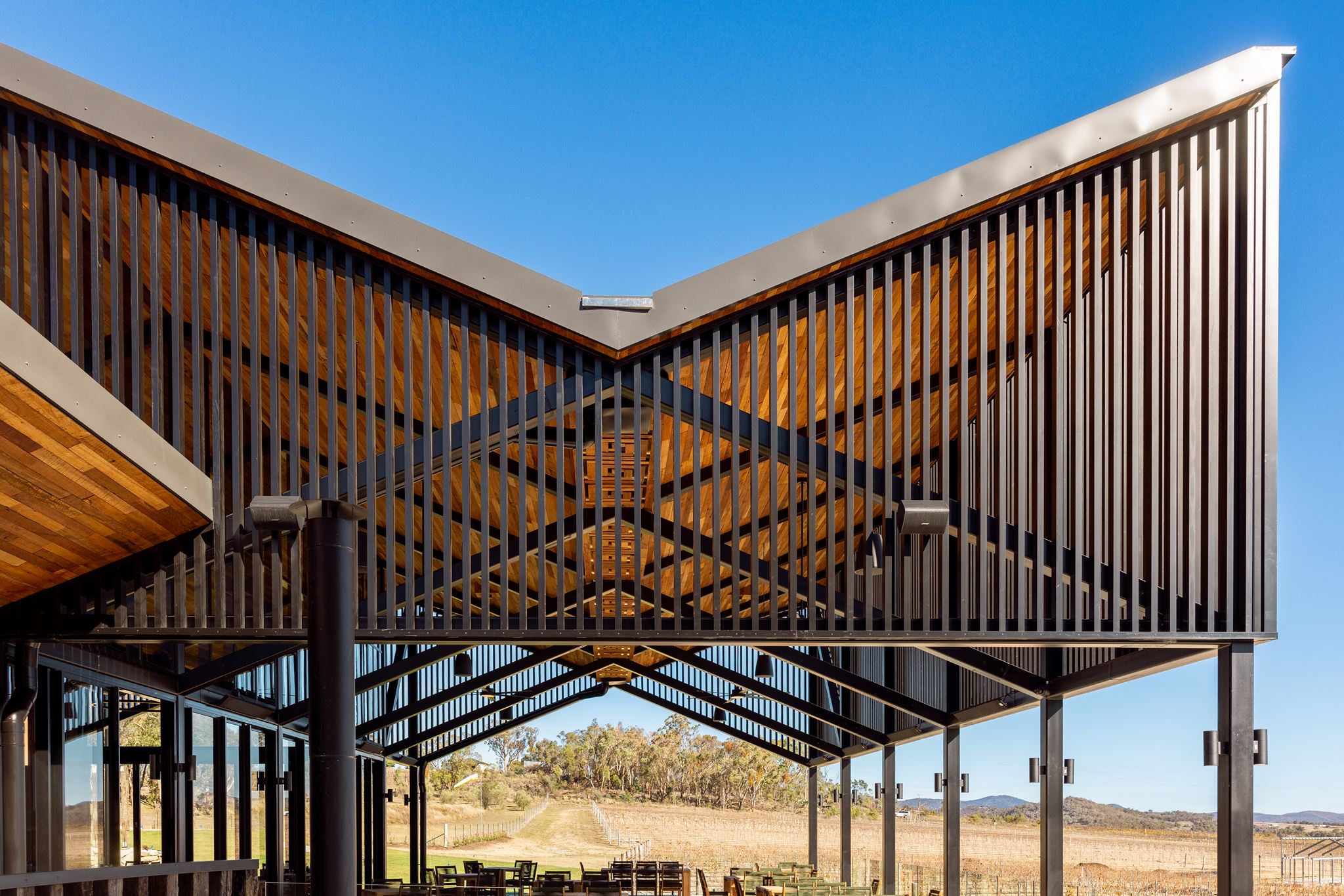
"The winery was conceived as a bold architectural intervention within the rugged landscape of Ballandean. A form that deliberately contrasts and complements its natural surroundings. Composed of black vertical battens, warm timber elements, and grounded brickwork, the material palette draws from both the rawness and richness of the region while establishing a strong and contemporary identity.
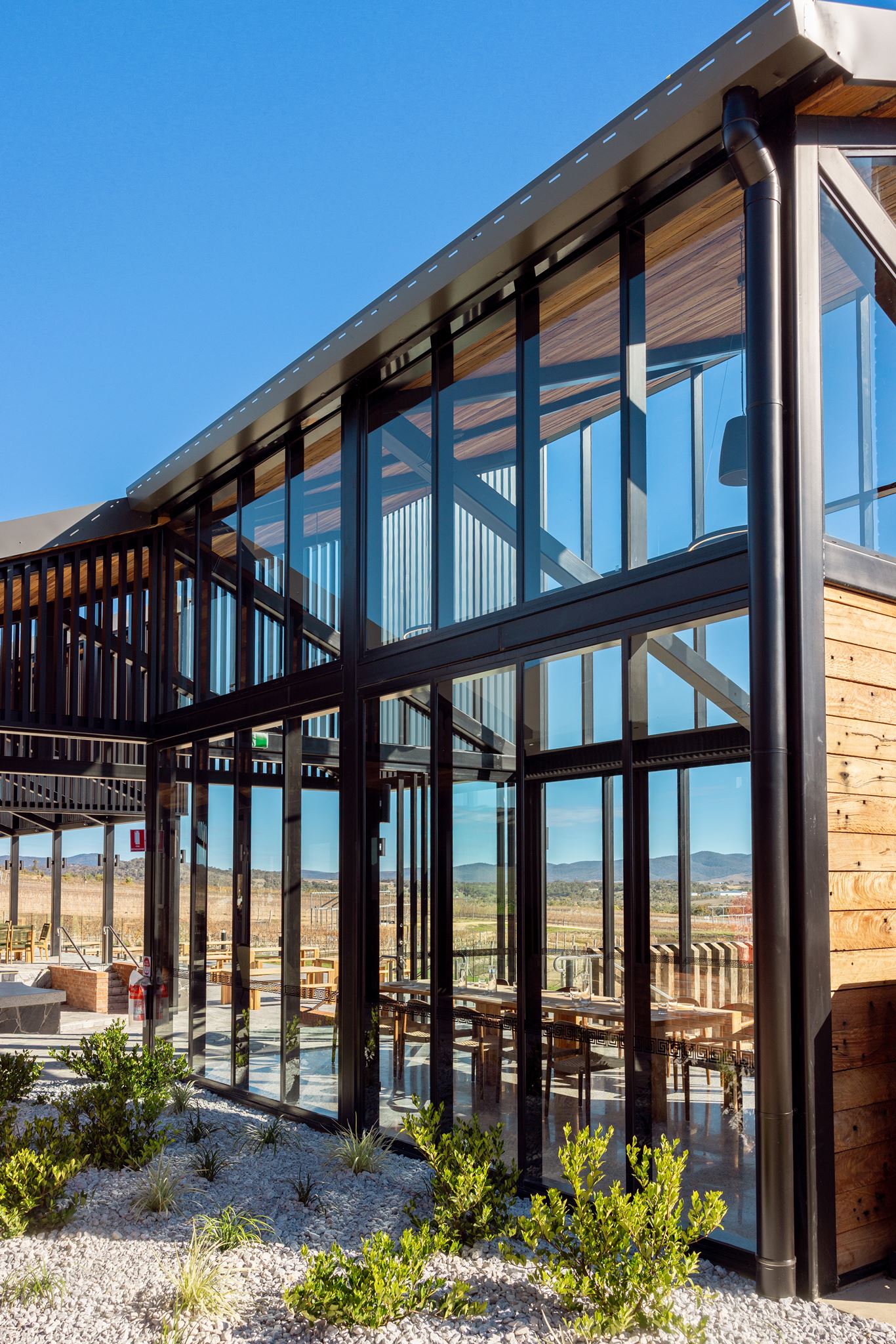
The building is intentionally abrupt in its placement within the landscape, emerging as a sculptural object and a distinct landmark amongst the vines and granite terrain. Rather than receding into the environment, the design stands as a place-maker, creating a memorable destination that anchors the site and reinforces the winery’s presence within the broader landscape.
Through its strong form, restrained palette, and deliberate relationship to the landscape, the winery establishes a contemporary architectural identity that is both contextual and iconic.
- Dax Yem, Yem Architects
The Build
Bringing Meteora to life required an extraordinary commitment to detail, craftsmanship and respect for place. Throughout the development, more than 10,000 reclaimed heritage bricks, historic railway sleepers and hardwood beams salvaged from old railway bridges were carefully incorporated into the estate, preserving character while reducing environmental impact.
The project also includes the Granite Belt’s first wine cave, more than 100 tonnes of structural steel and extensive stone paving, all thoughtfully integrated into the landscape. Together, these elements create a destination that feels both timeless and deeply connected to the region’s natural beauty.
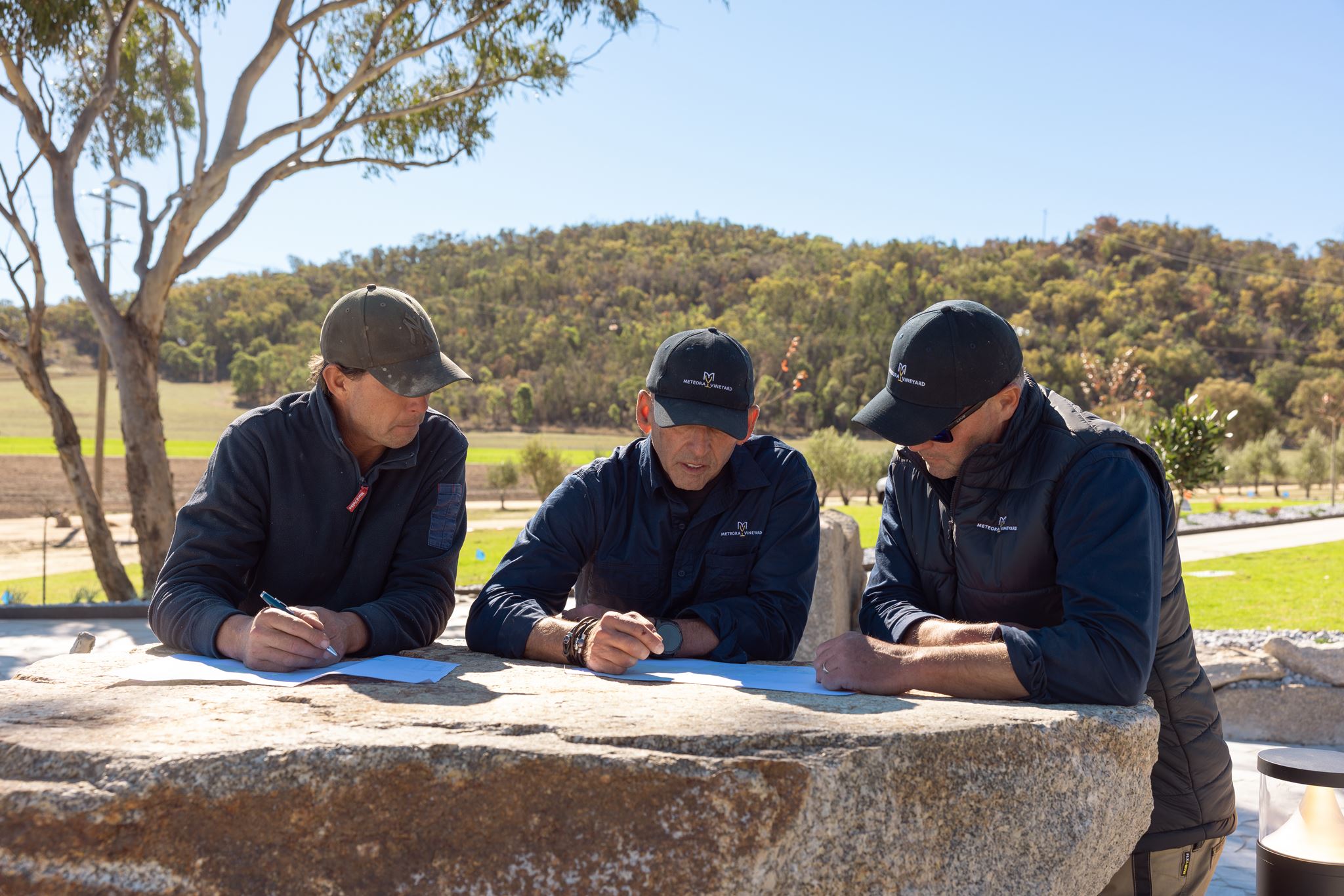
"It has been a privilege to help bring Andrew and Karen's vision to life and create a space that reflects the character, quality, and experience that is Meteora Vineyard. From the beginning, the trust, collaboration, and passion for the project made the entire process rewarding for our team. Building a cellar door is more than constructing a building, it's creating a welcoming destination where people gather, connect, and experience the story behind the wines. We are proud to have contributed to a project that will become an important part of the winery’s future and visitor experience. We sincerely appreciate the confidence placed in us throughout the journey and look forward to seeing the cellar door enjoyed for many years to come."
- Ryan Brunckhorst, Brubuild
Our Journey
From a once-neglected farm to a flourishing vineyard destination, our journey has been one of vision, hard work, and transformation. We have cleared, pruned, fenced, fixed dams, demolished sheds and built new ones. We kept some of the old vines and planted lots of new ones, focusing on Italian varieties better suited to the climate and terroir of the region. Join us as we take a trip down memory lane and share the remarkable story behind Meteora’s path to opening.
- 2020 July 16th

Vineyard Purchased
The Catsoulis’ didn’t intend to buy a vineyard. But after a chance weekend in the country, Andrew and Karen fell in love with the region instantly.
- 2020 August 28th

Controlled Burn Off
We learnt that the best approach for safety and vine health is a controlled burn off.
- 2020 September 22nd

First Bud Burst
To achieve this outcome was transformational for our vineyard and would have been impossible without the best advice and team in the region.
- 2020 November 3rd

New Dam
Water security was the next major issue. Building a stock and domestic dam was an early priority,
- 2021 February 27th

First Harvest
Our first harvest took place across four weekends during COVID, with every row hand picked by friends and family.
- 2022 January 1st
.jpg?preset=timelinepagepoint__lowres&t=1780142414784)
Demolition
Early on, we explored every possibility to retain and repurpose some of the original structures on the property. But after plenty of inspections, conversations and planning, it became clear they simply couldn’t be saved.
- 2022 September 14th

Preparation For New Vines
The soil was carefully prepared before the installation of more than 1,000 new end posts, over 500 rows of trellising, 5 kilometres of irrigation and 15 kilometres of wire - all completed with meticulous precision in preparation for our new vines.
- 2022 December 10th
.jpg?preset=timelinepagepoint__lowres&t=1780142417340)
Planting Our Grafted Vines
November 2022 marked a major milestone in the Meteora journey: the first planting of our grafted vines. As the vision for the vineyard continued to take shape, we chose to plant two Italian varieties: Montepulciano and Barbera.
- 2023 April 4th
.jpg?preset=timelinepagepoint__lowres&t=1780142417639)
New Machinery Shed
As construction continued, one of our first priorities was replacing the old machinery shed that had made way for the new development.
- 2023 April 4th
.jpg?preset=timelinepagepoint__lowres&t=1780717574711)
Bees
Bringing beehives into the vineyard felt like a natural extension of what we’re trying to create here at Meteora. Beyond the honey itself, the bees play an important role in the broader ecosystem of the vineyard, contributing to biodiversity and the health of the surrounding landscape.
- 2023 September 22nd
.jpg?preset=timelinepagepoint__lowres&t=1780142419496)
Wine Cave
Creating an underground wine cave required extensive excavation, engineering and precision, with more than 100 holes drilled into the rock before controlled blasts shifted over 800 cubic metres of solid granite to create the foundation for the cave.
- 2023 September 3rd
.jpg?preset=timelinepagepoint__lowres&t=1780173470940)
Olive Grove
We visited a now-defunct olive farm and met with the owner to negotiate the purchase of 200 mature olive trees, many already around 15 years old. Rather than seeing them disappear, we saw an opportunity to give them a new home.
- 2024 August 16th
.jpg?preset=timelinepagepoint__lowres&t=1780717561373)
Processing Facility Construction
As the vineyard continued to evolve, attention turned to one of the most important pieces of infrastructure on the property: the processing facility and production shed. Spanning more than 1,000m², the slab was designed to support over 50 wine tanks of varying sizes, each placing enormous loads on the structure once filled.
- 2024 September 13th
.jpg?preset=timelinepagepoint__lowres&t=1780717564307)
Processing Facility Completion
Achieving the building’s distinctive sawtooth required extraordinary precision, with steel fabricators, crane operators, builders and contractors all working together to bring the design to life. The structural steel was fabricated locally before being transported to site and carefully lifted into position, beam by beam. At the same time, the massive tilt-panel walls were erected, transforming an empty concrete slab into a building with real presence and scale.
- 2025 March 16th
.jpg?preset=timelinepagepoint__lowres&t=1780717561642)
Road Network and Water Management
More than 3,500 tonnes of decomposed granite were carefully placed to create an extensive internal road network, providing reliable all-weather access throughout the property. At the same time, large-scale water storage tanks were installed, access routes established, and countless details coordinated to ensure the property could operate efficiently as it continued to grow.
- 2025 May 3rd
.jpg?preset=timelinepagepoint__lowres&t=1780717572336)
Winemaking Equipment Installation
Our next challenge was sourcing and installing the equipment needed to bring our expanded winemaking vision to life. This included wine tanks, a glycol cooling system, cold room, bottling line and labelling equipment - all essential components of a modern winery.
- 2025 June 14th

Cellar Door Construction
Before the steel framework could be erected, a series of large tilt-panel walls were poured on-site and carefully lifted into position by crane. It was an exacting process requiring meticulous planning and precision, with very little margin for error. With the walls in place, attention turned to the steel framework. The roofline was intentionally designed to reflect the contours of the surrounding granite hills, helping the building feel connected to the landscape rather than imposed upon it.
- 2025 December 5th
.jpg?preset=timelinepagepoint__lowres&t=1780911556003)
Final Stages of Construction
Throughout the project we have blended more than 100 tonnes of structural steel, 3,000m² of marble crazy paving, custom marble benchtops, recycled hardwood timber walls and ceilings, century-old railway beams and sleepers, 100-year-old recycled bricks and more than 6 kilometres of aluminium screening, each piece individually cut, fitted and installed by hand.
- 2026 June 1st

Completion
Over the past six years, they have transformed a once-neglected property into Meteora Vineyard, driven by a vision to create a destination that celebrates exceptional wine, hospitality and the unique character of the region. As we prepare to welcome our first guests, we are incredibly proud of what has been achieved and deeply grateful to everyone who has been part of the journey so far.
.jpg)